
How To Spot A Fake Beneficial Ownership Form
Share this post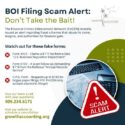
You may have received a letter “from the IRS” claiming to be Form 3897, beware it is fake. While it may include a form number, a revision date, and references to federal law, and warnings about penalties for noncompliance, but it is a scam. There is no IRS Form 3897 for beneficial ownership reporting. In addition, the IRS is not the agency responsible for administering the CTA’s reporting requirements.
This recent scam includes a fake document, labeled “Form 3897.” It states that the recipient was required to provide beneficial ownership information under the Corporate Transparency Act (CTA). It also demanded a $119 filing fee, payable by check or money order to a company called “Annual Records Service.” It is phony and it exploits confusion around a real federal reporting requirement.
To make the demand seem more official, the fake document cites the Corporate Transparency Act (CTA) and warns that companies providing false information or failing to report could face significant penalties, including fines and imprisonment. That language is designed to get your attention and gives the impression that completing the form is a legal obligation. Please know that it isn’t.
The CTA Is Real. This Form Is Fake.
Under current rules, companies organized in the United States do not have to file beneficial ownership reports with FinCEN. Certain companies formed outside the United States and registered to do business here may still have reporting obligations. For companies that are required to file, reports are submitted directly to FinCEN through its official electronic filing system. There is no fee to file directly with FinCEN.
Why This Scam Is Especially Concerning
The real beneficial ownership reporting system was designed to collect sensitive identifying information, including data from government-issued IDs. A business owner who knows that the CTA exists, or remembers hearing that companies were required to report their owners, might assume that a document requesting similar information is legitimate. Because the rules have changed several times, business owners may not know whether they’re currently required to file. Scammers count on that confusion.
What To Do If You Receive A Letter Like This
Don’t complete the fake form. You shouldn’t provide your company’s EIN, ownership information, or other personal details in response to an unsolicited mailing without verifying its legitimacy.
Don’t send payment. FinCEN does not charge a government fee for filing beneficial ownership information directly with it. You do not need to send a check or money order to a private business to satisfy the federal BOI reporting requirement.
It’s a good reminder that scammers don’t always need to invent an elaborate story. Sometimes they simply take a real government requirement, assign it an official-looking form number, add a deadline and a payment demand, and hope someone complies. Don’t let a form number or a threat of penalties make the decision for you. When in doubt, assume it’s a scam or contact us to ask the legal questions you may have.